
Navigating the Short-Term Rental Regulations Minefield in 2026: Jeffco vs. Douglas County

Key Details
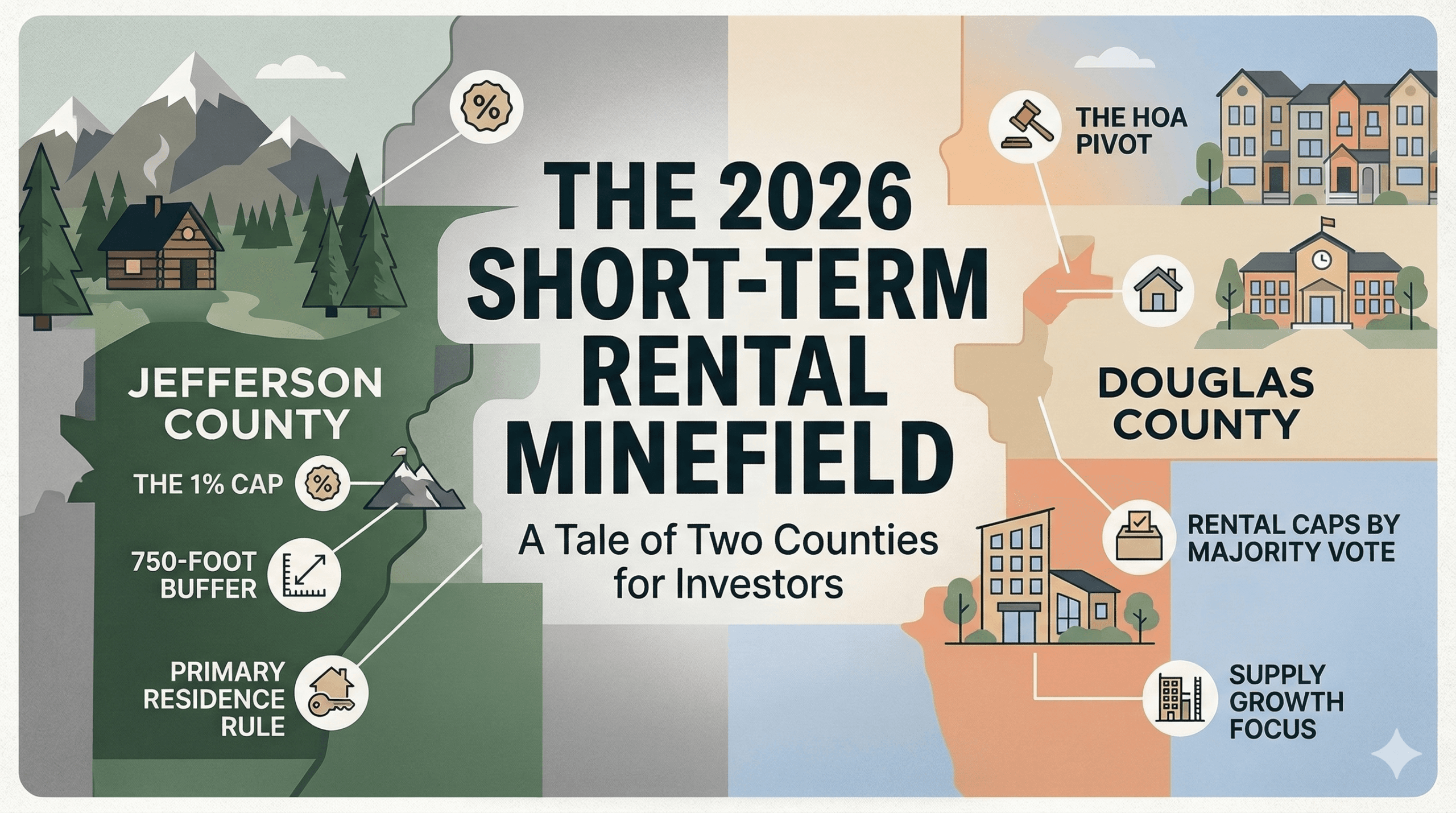
The 2026 Short-Term Rental Minefield: A Tale of Two Counties
For small investors in the Denver metro area, the “Wild West” era of short-term rentals (STRs) has officially ended. In 2026, navigating short-term rental regulations is no longer just about choosing a property with a view; it is about understanding how local policy can build or break your ROI. Whether you are eyeing a mountain getaway in unincorporated Jefferson County or a suburban townhome in Douglas County, the rules of the game have shifted toward aggressive inventory management and neighborhood preservation.
Jefferson County: High Barriers to Entry
In Jefferson County (“Jeffco”), the county has moved from simple registration to strict management to protect long-term housing resources and clear evacuation routes. If you are looking to invest here, you must account for these primary hurdles:
Douglas County: Supply Growth Meets HOA Hurdles
Douglas County is taking a different path, focusing on increasing supply by lowering the “litigation tax” on new builds through the 2026 Construction Defect Dispute Ordinance. However, while the county may be friendlier to developers, the local short-term rental regulations are often dictated by HOAs rather than the local government.
The “Sawgrass Precedent” is the biggest story of 2026. Courts recently ruled that HOAs can cap rentals at 25% with a simple majority vote, even if they fail to meet the traditional 67% threshold. For investors, this means a property that is “STR-friendly” today could be restricted by a single board vote tomorrow.
The 2026 Tax and Rental Reality
Regardless of which county you choose, your budget must account for Colorado’s new split assessment rate. For the 2026 tax year, residential property is assessed at 6.8% for local government and 7.05% for school districts.
As the market continues to show a price-sensitive trend, the protest window from May 1 to June 8 is your critical window to ensure your tax bill matches the current market value. In this environment, having an expert who understands the nuances of local short-term rental regulations is the difference between a cash-flowing asset and a costly mistake.
Spot the Opportunity Before the Dust Settles. Smart investing is about timing. If you’re ready to identify which Denver neighborhoods are poised for appreciation in 2026, let’s look at the map together.