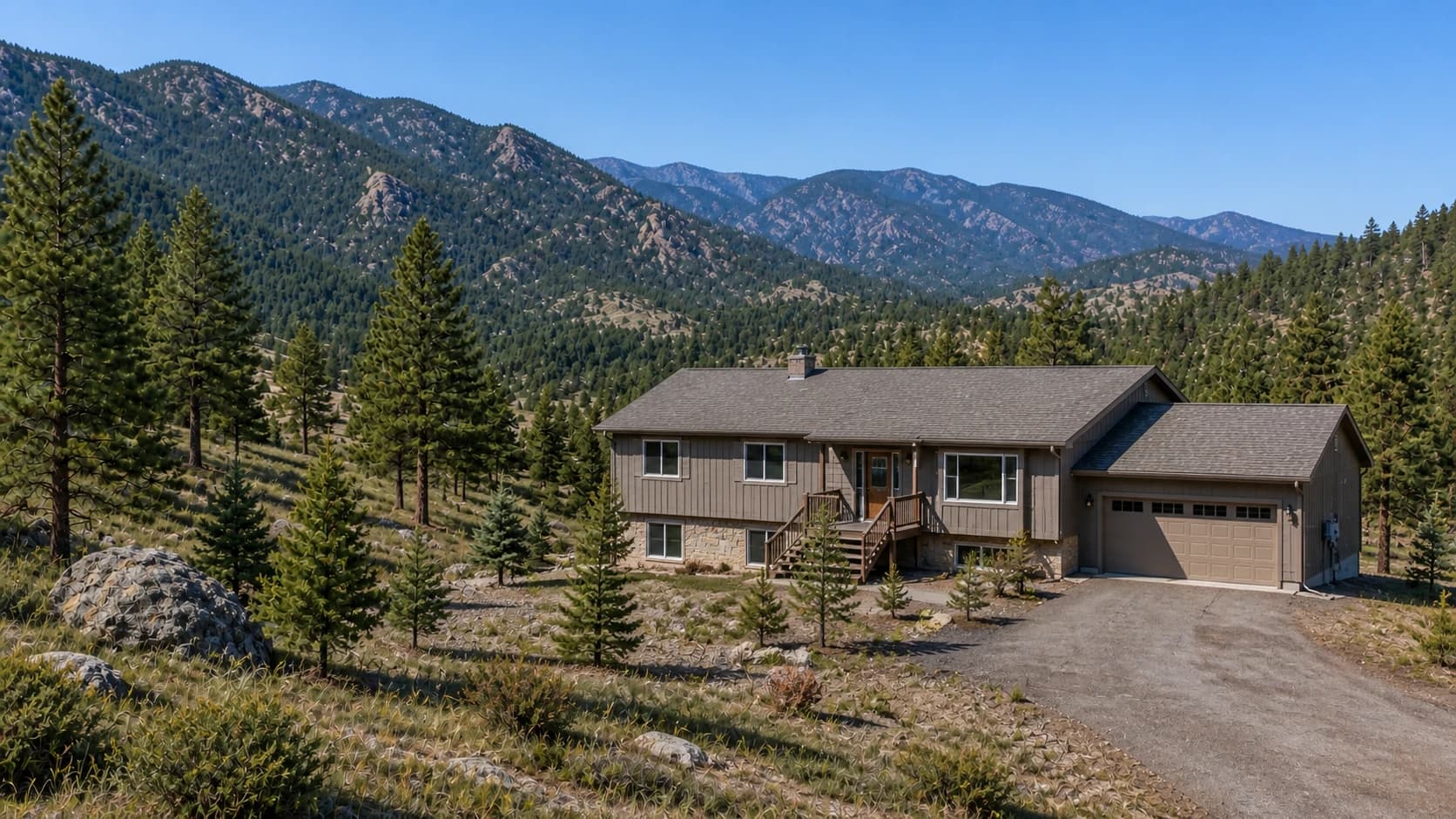

A house can fit the budget, pass inspection and still fail a more basic test: can the buyer get acceptable insurance at a cost that keeps the deal workable?
That question used to arrive late in many transactions. Buyers would compare the mortgage payment, taxes and HOA dues, then treat the insurance quote as another closing item.
Colorado wildfire risk is changing that order.
Insurance availability, premium, deductible and coverage now belong in the early property-underwriting conversation. This is most obvious in mountain and foothill communities, but it is not limited to homes surrounded by pine trees. Carriers also evaluate roof condition, nearby vegetation, access, prior claims, rebuilding cost and the concentration of risk across an area.
The practical point is not that every Colorado house has become uninsurable. It is that a buyer should no longer assume one address will price and qualify like the next.
Aspen Acres is testing the system
The Aspen Acres fire gives Colorado a painful real-world test.
The fire destroyed more than 300 homes after burning across roughly 102,000 acres, according to Denver Post reporting. State officials did not yet know how many destroyed homes were uninsured when that report was published.
The losses are arriving after Colorado made several post-Marshall-fire insurance changes. Those reforms addressed issues such as additional living expenses and payment for personal property after a declared wildfire disaster. Colorado also created the FAIR Plan as a last-resort property-insurance option for owners who cannot obtain standard coverage.
But the Aspen Acres losses show why a reform on paper and a household’s recovery are not the same thing. The Post found owners dealing with no coverage, limited coverage and disputes over the value of what was lost. It also reported that fewer than 300 properties statewide were insured through the FAIR Plan and that only one home lost in Aspen Acres carried a FAIR Plan policy.
Those figures do not tell us how the entire Colorado market is performing. They do show how much remains unresolved: who can obtain standard coverage, what protection people actually buy and whether the limits match the cost of rebuilding.
A temporary protection is not a market fix
The Colorado Division of Insurance has also proposed Emergency Regulation 26-E-04, a moratorium on certain cancellations and nonrenewals in the Aspen Acres fire territory.
As of August 17, the regulation was still posted as a draft for public comment. It should not be described as a statewide prohibition or a final rule until the Division publishes that action.
Even if adopted, a temporary moratorium would protect people in a defined disaster area during an immediate crisis. It would not answer the broader questions facing Colorado homeowners and buyers:
- Which properties can still obtain standard coverage?
- What mitigation work will a carrier require?
- How large are the wildfire and wind or hail deductibles?
- Does the policy pay replacement cost or actual cash value?
- Are the dwelling limit and loss-of-use coverage enough for a long rebuild?
- What happens at the next renewal?
Those questions can change the real cost of ownership even when the purchase price does not move.
The FAIR Plan is a backstop, not a substitute
The Colorado FAIR Plan exists for properties that cannot obtain coverage through the standard market. It is a nonprofit organization funded through assessments on admitted property insurers rather than public dollars.
It is deliberately a last resort. An applicant must work through a licensed agent and provide proof that three standard insurers declined the property. The Plan’s eligibility guidance also says its coverage is limited and pays actual cash value rather than the cost to rebuild or replace the home.
That distinction matters.
Actual cash value generally accounts for depreciation. Replacement-cost coverage is designed around what it takes to repair or rebuild with comparable materials, subject to the policy’s terms and limits. A policy that makes a property technically insurable may still leave a material gap in a major loss.
A buyer considering the FAIR Plan should understand the full package, not just whether a declaration page can be produced for the lender. That may include separate coverage for liability, personal property, loss of use or other exposures not handled the same way as a standard homeowners policy.
Insurance belongs earlier in buyer due diligence
I have written before about rising Colorado insurance costs. The next step is to treat insurability as an address-specific question before too much of the transaction is riding on an assumption.
A buyer does not need to become an insurance underwriter. A buyer does need a real quote for the actual property—not a generic estimate based only on price and ZIP code.
Before the relevant contract deadlines pass, the useful questions include:
-
Will a carrier write this specific property? Ask the agent to quote the address using the available property details, roof information and claims history.
-
What is the annual premium? Compare it with the amount used in the lender’s payment estimate. A meaningful difference can affect cash flow and, in some cases, loan qualification.
-
What are the deductibles? A percentage-based wind, hail or wildfire deductible can represent a much larger out-of-pocket exposure than a flat deductible.
-
How is the home valued? Review the dwelling limit, replacement-cost assumptions and whether any portion of the policy pays actual cash value.
-
What is excluded or limited? Ask about detached structures, personal property, water, sewer backup, loss of use and liability. The right questions depend on the property and policy.
-
What mitigation is required? Roof material, overhanging vegetation, defensible space, driveway access and nearby fuel may affect eligibility or pricing. Confirm whether work must be completed before binding coverage or after closing.
-
Is the quote bindable, and for how long? A preliminary estimate is not the same as a carrier’s commitment to issue the policy. Confirm what remains subject to inspection or underwriting review.
Insurance agents and lenders should answer the insurance and financing questions. The real-estate job is to make sure those conversations happen early enough for the buyer to make an informed decision.
The risk is broader than the burn scar
Wildfire insurance is often discussed as a mountain-property issue. That frame is too narrow.
The direct exposure may be greatest in the wildfire-urban interface, but the market effects can travel farther. Carriers manage statewide catastrophe exposure. Rebuilding costs affect dwelling limits. Hail and wildfire can influence the same book of business. Buyers may encounter different underwriting decisions across neighborhoods that look similar on a map.
That does not mean every premium increase can be blamed on wildfire, or that every nonrenewal signals a statewide retreat. We still need better public data on premiums, nonrenewals, mitigation credits and claim outcomes by geography.
Until that data improves, the most useful response is not panic. It is earlier verification.
The old homebuying question was: can I afford the payment?
The newer version is: can I afford the payment, taxes, HOA costs and the insurance this particular property can actually obtain?
That is not a small closing detail. It is part of deciding whether the house works.
This article provides general real-estate education, not insurance, lending or legal advice. Policy terms, underwriting decisions and loan requirements vary. Buyers should confirm coverage directly with licensed insurance and lending professionals.