
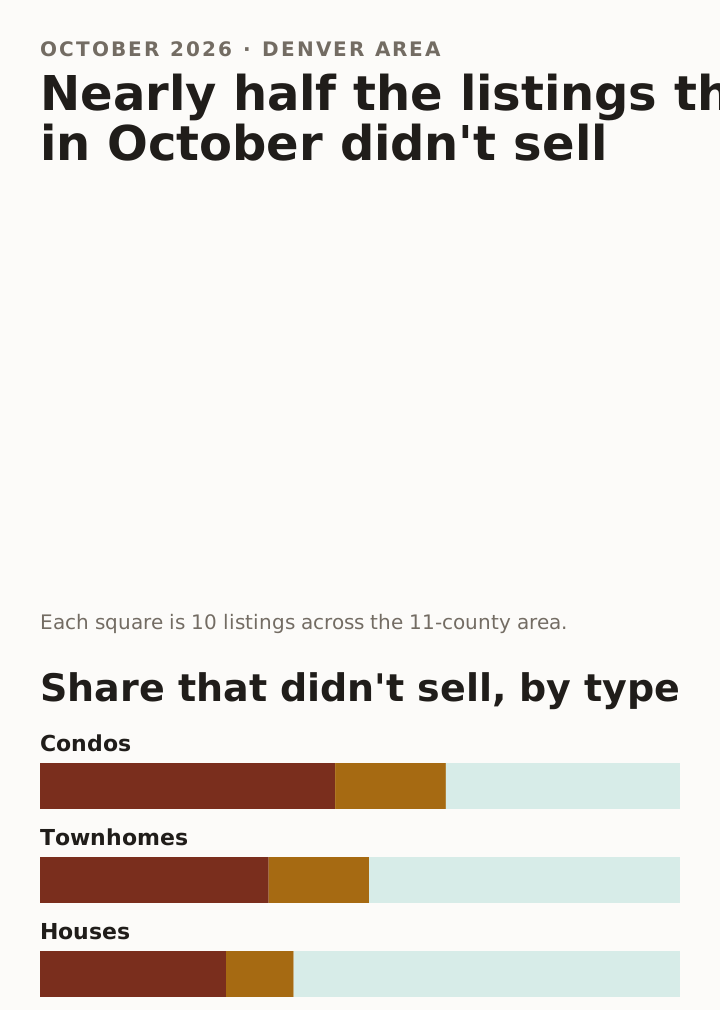
October was a rough month to be a seller who priced on hope. Of all the listings that left the market around Denver last month, nearly half went without selling: 1,883 expired and another 709 were pulled, against 3,189 that sold. And the ones that expired weren't sitting there because buyers disappeared, since they started out priced nearly 10% above recent sales of comparable homes in their county and had been on the market for about 100 days before giving up.
They didn't fail for lack of trying, either. Seven out of ten expired listings cut their price at least once, and the typical cut was 5%, about the same as the cuts on homes that sold. The difference is where they started. Even after the cuts they were still asking 5% more per square foot than their county's recent sales, while the homes that sold were within 2%. They cut, just not far enough, and every extra month on the market gives the next buyer one more reason to wonder what's wrong with the place.
Condos took the worst of it by a mile. Close to two out of every three condo listings that ended in October didn't sell, and townhomes were the next hardest hit. If you own one and want to sell, the comparison that matters is the other units in your complex and your part of town, not what detached houses are doing.
The sellers who did get to closing gave up more than just price. 63.5% of October sales came with a seller concession, money toward the buyer's closing costs or a rate buydown, and the typical one was $10,000, or 2% of the price. They're a little bigger than a year ago, so if you're listing this winter, expect to offer one too. For FHA buyers it's practically standard: 92% of FHA sales in October had a concession.
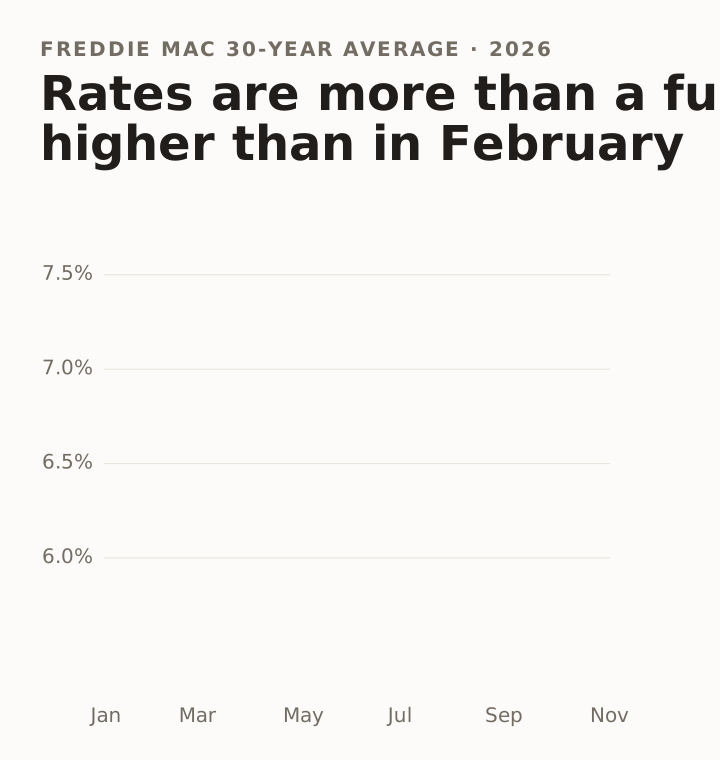
I think rates are a big part of why. Freddie Mac's 30-year average hit 7.40% in the middle of October, the highest since November 2023, and it's still sitting at 7.18% this week, way up from 5.98% back in February. Mortgage News Daily's index was at 7.17% on Thursday. On a $599,000 home with 20% down, the payment comes to $3,246 a month in principal and interest, $305 more than the identical loan cost a year ago at 6.22%. A seller-paid buydown is one of the few ways to bring that payment down.
If the payment works for you, this is a pretty good time to be shopping. There are plenty of homes to choose from, more than half of October's sales closed under the final asking price, and three out of four sold for less than the seller first asked. The expired listings are worth a look too. Those sellers wanted to move, they just priced themselves out, and some of them will be a lot more realistic the second time around. When you write an offer, have your lender run it both ways, a lower price versus the same money toward a buydown, before you decide which one to ask for.
For sellers, October's lesson is pretty simple: price it close to what comparable homes near you have sold for, plan on a concession, and don't count on the market coming up to meet you while rates are over 7%. If your listing expired this fall, or you're thinking about listing in the spring, give me a call and we'll work out a price that sells.