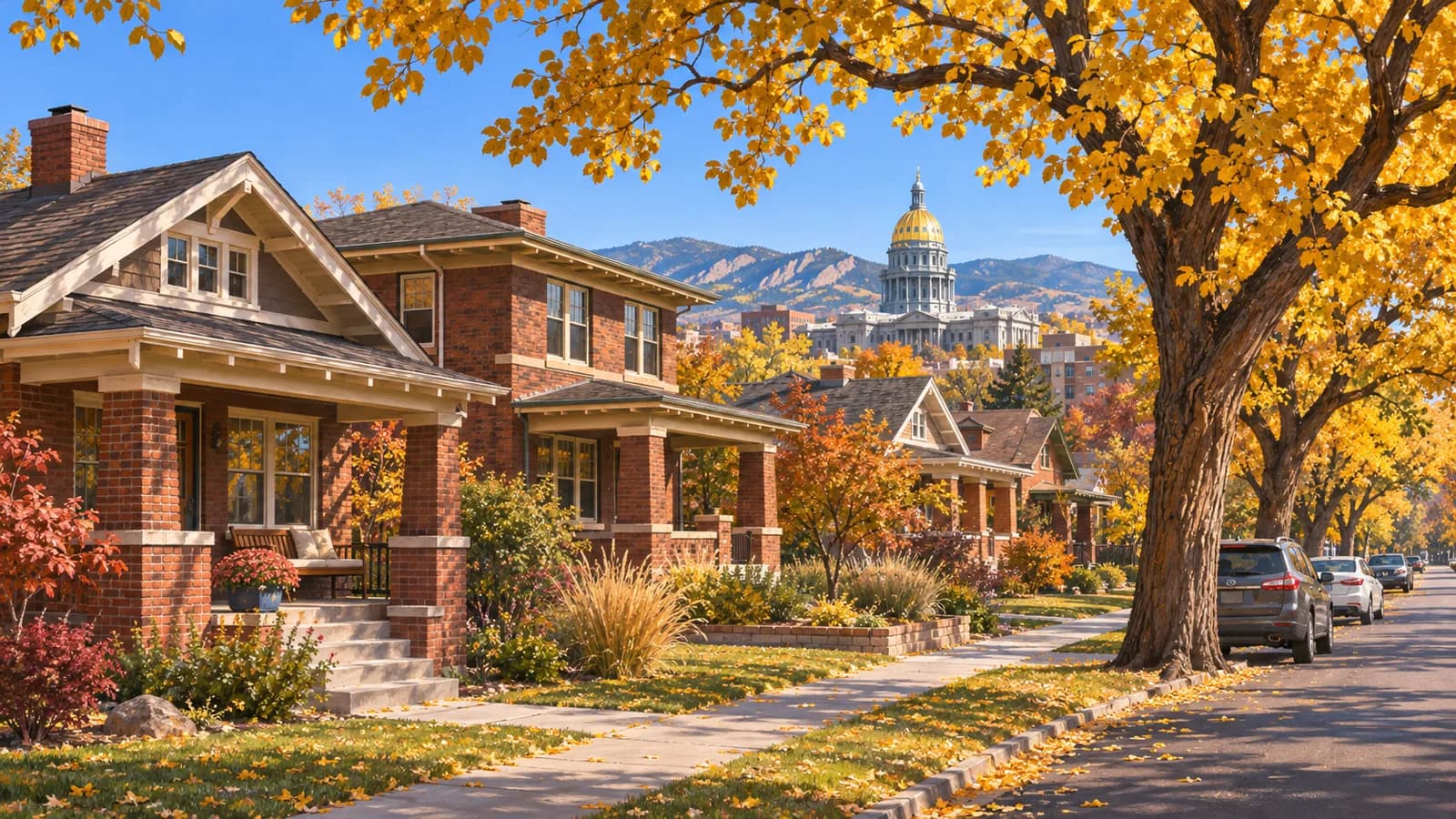

With Phil Weiser headed to the governor's office and Democrats on track for two-thirds of both chambers, the rules for owning, selling and buying a home in Colorado are about to shift. A couple of dates land before lawmakers even sit down on January 11, a tax change on selling a rental or second home that could hit anything closing after December 31 and a federal ban a week later that keeps the biggest landlords from buying single-family homes, and new school taxes follow on the property tax bills you'll pay next spring.
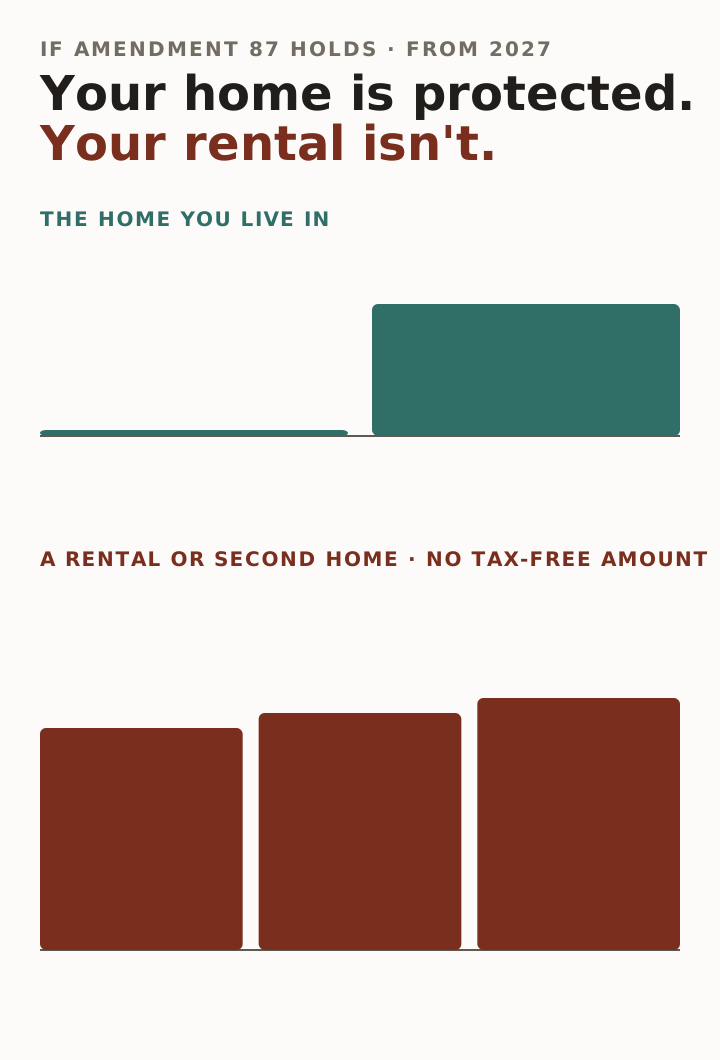
The tax change is Amendment 87, the graduated income tax, which is leading but still too close to call. If it holds, the flat 4.4% we all pay today turns into brackets next year, which is a wash or a small cut for most people but climbs to 8.4% at the top. Selling the home you live in doesn't change much, since the first $250,000 of gain ($500,000 if you're married) is already tax-free and anything above that stays at 4.4%. A rental or a second home gets NO tax-free amount, and a big gain from one sale is exactly the kind of income that lands in the top brackets. I own rentals myself, so this is the one I'm watching closest, and if you've been planning to sell an investment property with a lot of built-up equity in the next year, it's worth a call to your CPA now about whether closing before December 31 makes more sense than waiting.
The landlord rule comes from Washington. From January 7, companies that own 350 or more homes generally can't buy single-family homes anymore under the ROAD to Housing Act. I wouldn't expect a wave of new listings from it, since the large landlords were already selling more homes than they bought this year and homes bought through build-to-rent programs are exempt, but for first-time buyers shopping entry-level homes it's one less deep-pocketed cash buyer showing up with a clean offer. Some of those buyers may also find it a little easier to qualify, since FHA is starting to accept newer credit scoring models in January.
Then come the tax bills. Denver Public Schools' 4A is passing, which adds about $72 a year on a typical Denver home with no end date, and the school levies in Littleton and Westminster are passing too. Douglas County's school measure failed, so owners there won't see a new school tax this round, and Jeffco's main measure is still too close to call. You'll see the new amounts on the bills due next spring. Boulder went a step further and approved a tax of about $4,000 a year on homes that sit empty more than half the year, from 2028 on, so if you own a second home there you have about a year to decide whether to live in it, rent it or sell it.
Those are the dates on the calendar. The legislature is where things could change the most for anyone who owns rentals. Two-thirds is enough to override a veto if they stick together, but the bigger shift is that the rent-pricing ban Governor Polis wouldn't sign now has a governor who wants it. Polis vetoed a ban on landlords using rent-pricing software in 2025, and Weiser campaigned on passing it, so I'd bet on it coming back and passing. The eviction bill and the option for cities to tax vacant homes, both killed in this year's session, could come back too. Those are the ones small landlords like me will feel, and I think we deserve a real seat at the table before any of them pass.
It isn't all aimed at landlords, though. Weiser also ran on faster permits and lower fees for homes selling under $600,000, plus more down-payment help, which helps buyers without costing current owners a thing. And he's said he'd rather work out zoning with cities than force it on them from the Capitol, so I don't see the state overriding local zoning while he's in office.
Washington is a lot less likely to move. Democrats took both the House and the Senate, but the President still has his veto and they're nowhere near the votes to override it, so I don't see much changing by law. The federal deadline that matters sooner is flood insurance: the program expires December 11 along with the stopgap budget keeping the government open, and Congress hasn't agreed on a long-term fix yet. If you're buying in a flood zone and closing in December, get that policy bound before the 11th instead of waiting on Congress.
If any of this touches you, whether it's a rental you've been thinking about selling, a December closing or a second home in Boulder, give me a call and we'll work out the timing together. I'll be following the session once it opens in January and will let you know which bills move.
Dates to Know
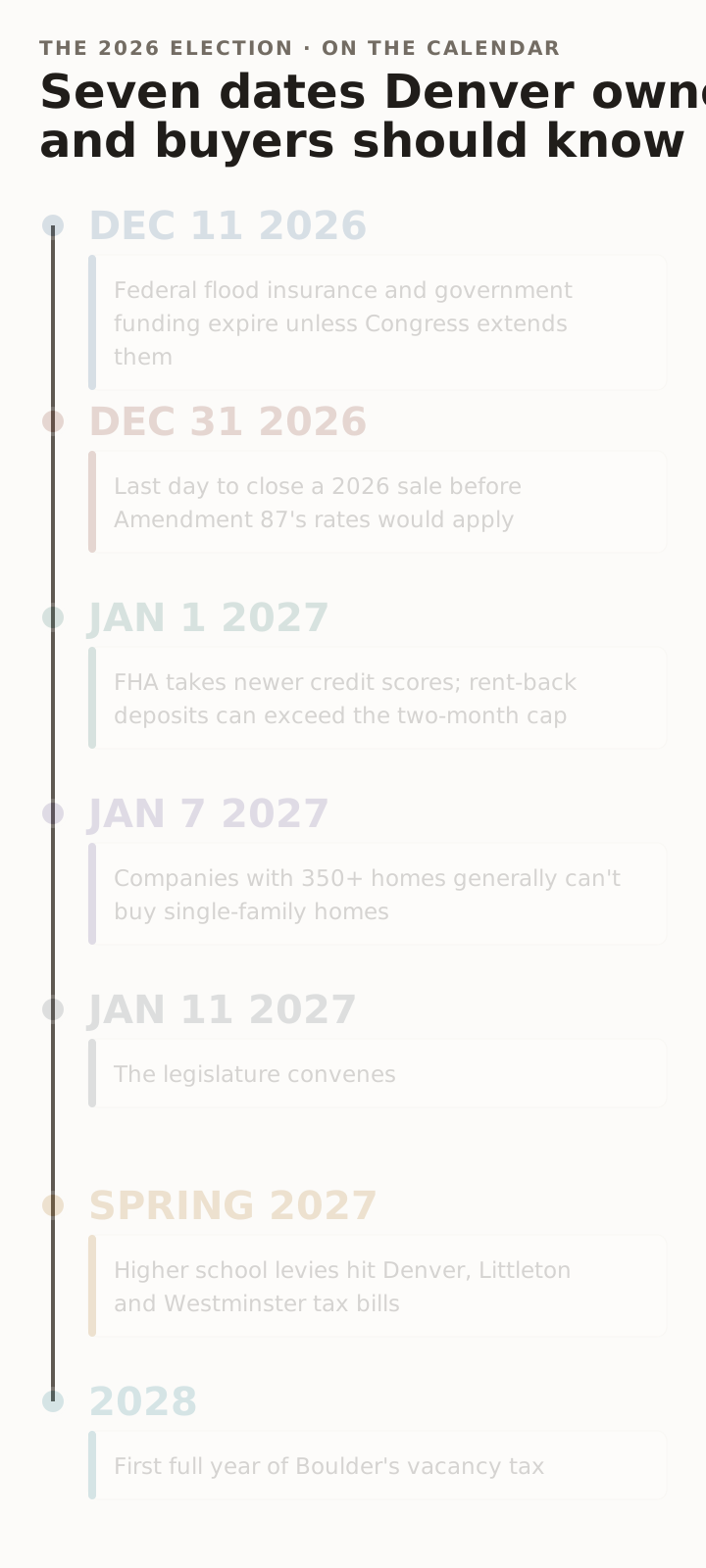
- December 11: Federal flood insurance and government funding expire unless Congress extends them.
- December 31: Last day to close a sale in 2026, before Amendment 87's rates would apply if it holds.
- January 1: FHA starts accepting VantageScore 4.0 and FICO 10T credit scores, and buyers who let the seller rent back after closing can collect a security deposit above the usual two-month cap.
- January 7: Companies with 350 or more homes generally can no longer buy single-family homes.
- January 11: The legislature convenes.
- Spring 2027: Higher school levies show up on Denver, Littleton and Westminster tax bills.
- 2028: First full year of Boulder's vacancy tax.